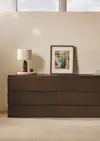
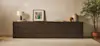
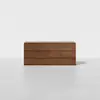
A quality dresser is not only long-lasting, but provides a sense of order and refinement to our daily lives. For design-minded buyers, especially those furnishing smaller city spaces, a premium dresser is defined by more than a polished exterior. Materials, drawer movement, modularity, safety, and sustainability all factor into what makes a dresser premium. The Dresser Collection from Thuma combines thoughtful engineering, sustainable materials, and purposeful craftsmanship to create the ideal storage piece.
Certain characteristics elevate a dresser from good to great and make it a smart investment. There are both aesthetic and technical markers of a piece that’s built to last. A premium dresser is crafted from high-quality materials, engineered with expert joinery, designed with smooth drawer mechanisms, and finished with protective wood stains.
Materials matter. Lower-end dressers may feature MDF, veneers, and mixed materials. Premium pieces are often made from solid wood.
Construction makes a difference. Basic fasteners or staples are not likely to hold up over time. Thoughtful joinery is an indicator of quality and longevity.
Drawer movement is something to consider. Budget dressers often feature standard slides prone to sticking and even breaking. Opt for soft-close, smooth-glide mechanisms instead.
Safety should be a priority. Don’t settle for limited detail. Look for clear guidance around anchoring and stability.
Sustainability indicates quality and integrity. Take note of products with unclear sourcing. Premium dressers are more likely to use sustainable, natural materials and feature eco-conscious certifications.
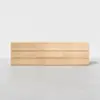
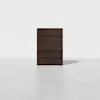
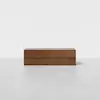
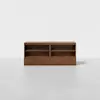
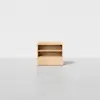
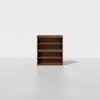
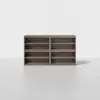
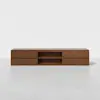
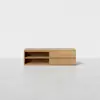
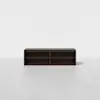
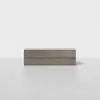
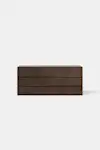
The Dresser Collection provides the ideal balance of quality, utility, and aesthetics. Crafted from solid wood with a sleek silhouette, the Nest Dresser features spacious, soft-close drawers for a premium experience. Its modular design makes it the perfect piece for changing spaces and evolving lifestyles. The Essential Dresser is also crafted from solid wood and made with soft-close drawers. Its low-profile legs, fixed format, and minimalist design make it a refined option for the modern bedroom.
Quality Materials
Solid wood remains one of the clearest indicators of a quality dresser. It provides strength, stability, and natural variation that makes each piece distinct. Thuma uses rubberwood, a hardwood that is an especially stable construction material. Our rubberwood is upcycled, repurposing trees at the end of their latex-producing lifecycle. The result is a more mindful material choice with warmth and longevity.
Drawer Hardware
Drawer mechanisms determine how a piece moves, how it feels through repeated use, and how it holds up over time. Modern dressers with soft-close drawers offer a quieter, more elevated experience. Soft-close drawers should glide without sticking and close without great force. The Nest Dresser and Essential Dresser each feature generous, soft-close drawers designed for everyday ease, with hardware-free drawer pulls. This intuitive design eliminates excess hardware and keeps the look clean and uninterrupted.
Safety Features
Recent federal standards have improved the safety of clothing storage units such as dressers, requiring hardware that secures the dresser to the wall to prevent accidental tipping. When shopping for a dresser, always review safety guidance, anchoring requirements, and stack limits if the piece is modular. Thuma’s dressers include anti-tipping hardware, and there is clear guidance for the Nest Dresser around stack limits for safe use.
Before choosing a dresser, be sure to measure the available space. Take measurements of the wall, floor space, and drawer clearance. A wide dresser can create a low, grounded profile. A vertical configuration can make better use of a narrow footprint. Standard dresser heights are about 30–35 inches. This height allows room for a mirror, such as the Cove Mirror, which is offered in wood finishes that coordinate with the Dresser Collection.
The Nest Dresser is fully customizable, made up of individual drawers that arrive ready to stack. You can choose the configuration that’s ideal for your current space, with the flexibility to change the arrangement of drawers down the line. While individual drawers are available, the Nest Dresser is offered in multiple configurations, from compact 3x1 and 4x1 formats to wider 3x2, 4x2, and 3x3 options.
When selecting a dresser, consider the following:
What items you plan to store.
The number and size of drawers.
Room layout, traffic flow, and ability to access each drawer fully.
Mindful materials and official certifications represent a commitment to quality and longevity, along with eco-conscious design. Look for responsible materials, low-emission certifications, and brands that are transparent about sourcing. Thuma’s core products are GREENGUARD Gold certified, meeting rigorous third-party standards for cleaner indoor air.